The Albers-Honegger Donation brings together the works given to the French State by Gottfried Honegger and Sybil Albers, together with the donations of Aurelie Nemours, Gilbert Brownstone and EMMANUEL and gifts from several other artists. The collection is listed in the inventory of the Centre national des arts plastiques (CNAP) and on long-term loan to the Espace de l'Art Concret. It is also the result of a personal story — that of Gottfried Honegger, a Swiss artist who set out to master the language of geometry in the early 1950s, and of his partner Sybil Albers. Zurich, Paris and New York were the first stops on this long journey.
The website of the Centre national des arts plastiques (CNAP) offers a database of the entire Albers-Honegger Donation. It covers the works on loan to the Espace de l'Art Concret, with detailed records, images and technical information.
The eac. takes its name from the historical concrete art movement. The term emerged between the two world wars: concrete art claims the objectivity and autonomy of its visual language, free from any reference to the reality of the outside world.
“Concrete and not abstract painting, because nothing is more concrete, more real than a line, a colour, a surface.” — Theo Van Doesburg
The Art Concret group was founded in 1930 around Theo Van Doesburg, bringing together Jean Hélion, Otto Carlsund, Léon Tutundjian and Marcel Wantz. The term “concrete art” was adopted by Wassily Kandinsky in 1938 and by Jean Arp in 1944 to describe their art. It was the Swiss artist Max Bill who gave the movement real momentum from 1936 onwards. The principles of concrete art can be applied to typography, architecture and design — the aim is to “create a measurable art, valid for all, in order to create a universal language, like that of science or music”. (Serge Lemoine)
1 - Art is universal.
2 - The work of art must be entirely conceived and shaped by the mind before its execution. It must receive nothing from nature's formal properties, nor from sensuality or sentimentality.
3 - The painting must be constructed entirely from purely plastic elements, that is, planes and colours. A pictorial element has no meaning beyond “itself”; consequently, the painting has no meaning beyond “itself”.
4 - The construction of the painting, as well as its elements, must be simple and visually controllable.
5 - Technique must be mechanical, that is, exact and anti-impressionist.
6 - A striving for absolute clarity.
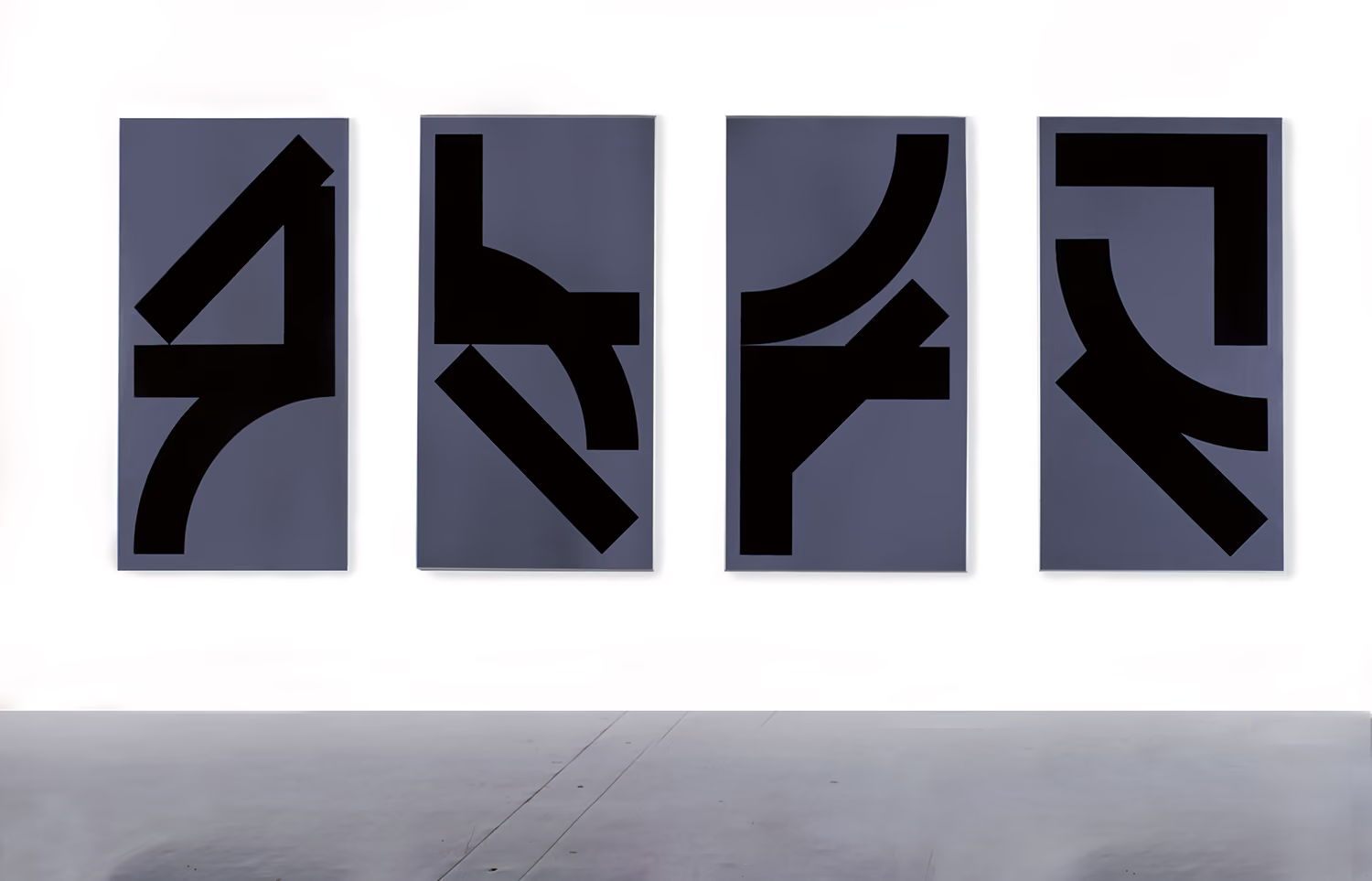
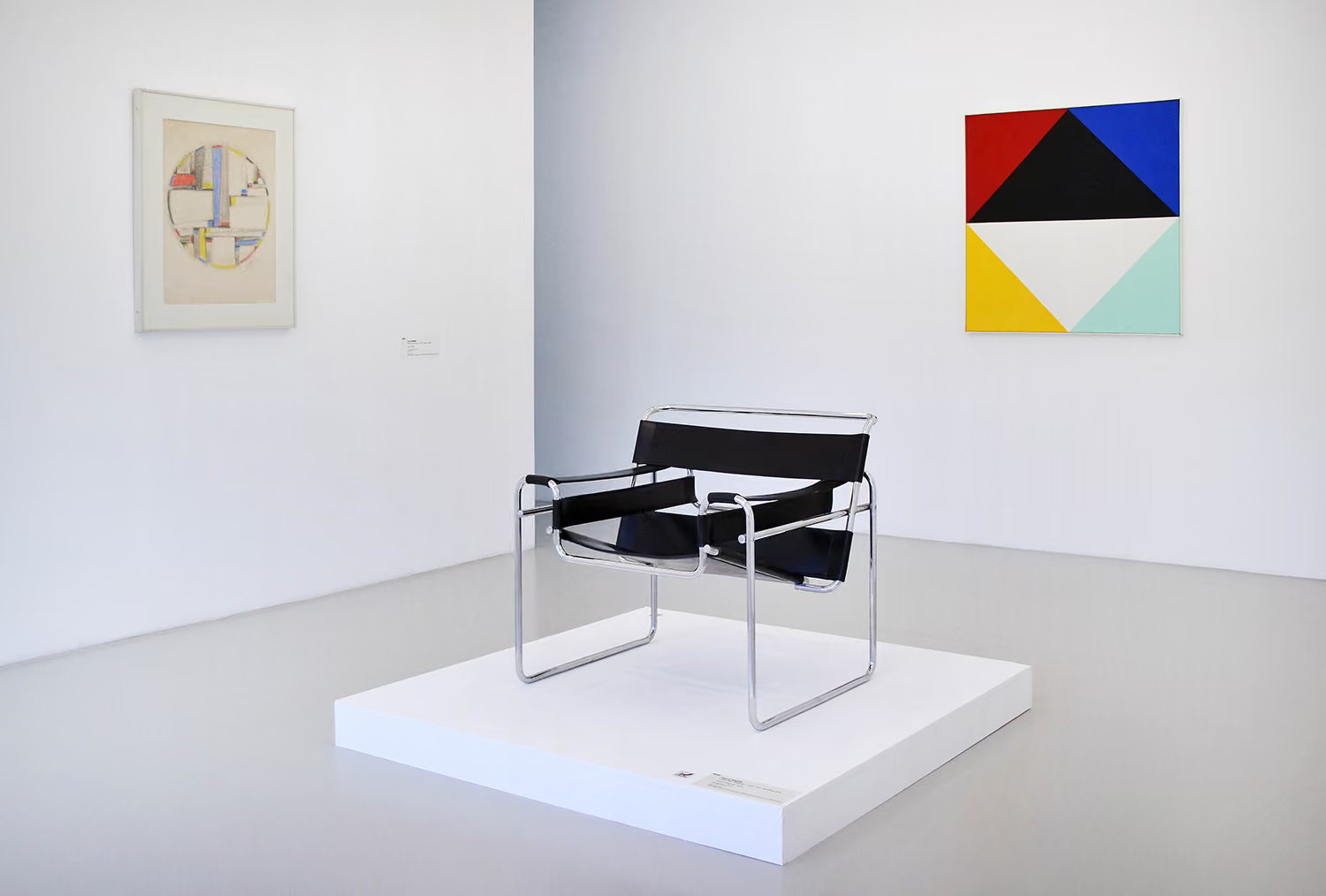
While the heart of the collection was built around the great names of Swiss concrete art (Max Bill, Richard-Paul Lohse, Camille Graeser, Gottfried Honegger) and French concrete art (Bernard Aubertin, Jean-François Dubreuil, François Morellet, Aurelie Nemours), the collectors placed it within the long history of European abstract art since 1900.
Concrete art can thus be seen taking shape in the very first years of the 20th century, as shown by works by Augusto Giacometti (1905) and Georges Vantongerloo (1921), and by Sonia Delaunay (1925–1929) and Frantisek Kupka (1932–1933).
True to the universalist spirit of concrete art, the collectors did not limit their collection to purely geometric works. They broadened its scope by reflecting on the most striking, sometimes surprising, developments of the 20th century, making their collection a work in its own right.
While it may seem obvious today that the leading figures of minimalism and conceptual art are represented in the permanent collection (Joseph Beuys, Daniel Buren, Alan Charlton, Richard Long, Helmut Federle, Imi Knoebel, Olivier Mosset, Bernar Venet and Franz Erhard Walther for Europe; Carl Andre, Robert Barry, Dan Flavin, Donald Judd, Joseph Kosuth and Richard Serra for the United States), the presence of artists linked to Arte Povera (Manzoni), Supports/Surfaces (Claude Viallat) or Nouveau Réalisme (Tinguely) is less expected. Yet it reflects the visionary spirit of the two collectors, who chose to explore the rigorous principles of concrete art in the light of the most radical artistic practices of the second half of the 20th century.
The Albers-Honegger Donation is not limited to purely geometric works. True to the universalist spirit of concrete art, the collectors broadened its scope by reflecting on the most striking — sometimes surprising — developments of the 20th century.

The collection is at the heart of the eac.'s educational mission. It feeds into workshops, guided tours, school activities and programmes for all audiences, and offers an ideal field for experimenting with the notions of shape, colour, system and series.
The collection is open to researchers, students and professionals by appointment. The website of the Centre national des arts plastiques also offers an online database of the entire Albers-Honegger Donation. This partnership with the CNAP ensures the conservation, dissemination and national and international reach of the collection.
Every year, the eac. presents a new reading of the collection, inviting contemporary artists, curators and researchers to take a fresh look at this exceptional collection.
The Donation is displayed in a dedicated building designed by the architects Gigon & Guyer. The permanent display offers visitors an overview of geometric abstraction from the 20th century to the present day, highlighting connections between artists of different generations and backgrounds.

Support our sustainable initiatives through committed patronage. Join the Circle of Friends and help place environmental transition at the heart of our art centre of national interest.